
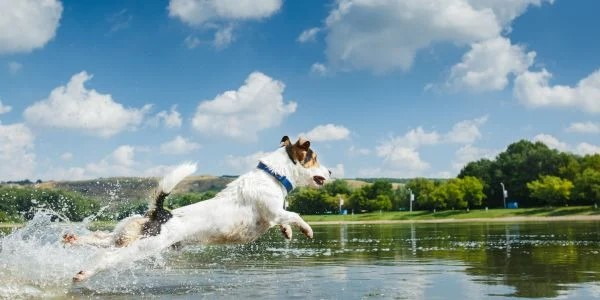
The hidden risk of secondary drowning
Does your dog love being in water? Do you know about this danger?
13 June 2025
We’ve had some wonderful warm and dry weather in the spring of 2025. It is tempting to allow your dog to spend time in the water to have fun and cool off a little. This is a fun way to spend time with your dog (but please bear in mind our advice about flea and tick treatments and the harm they can cause to wildlife).
There is another danger, to your dog, which is less obvious. It’s called Secondary Drowning, or Dry Drowning. Many working breeds will want to continue to chase and to retrieve in water, and they will not want to stop. But in this case, too much fun can have disastrous consequences. Natasha from 4Paws Hydrotherapy in Ringwood explains the dangers;
“Something that we need to be mindful of is secondary drowning. This can occur from prolonged water exposure mainly due to dogs becoming tired and lower in the water. Their muzzle is on or below the water line meaning they can inhale water. It can also be caused if dogs are retrieving balls and sticks and opening their mouth to grab the object, and water enters their mouth and throat. This can also happen when a dog goes under the water for a short time.
When secondary drowning occurs, breathing becomes difficult for the dog when water enters their lungs or if it irritates their larynx (vocal cords) and causes the larynx to spasm. Secondary drowning often isn’t instant and can happen hours and even days after swimming. If your dog ever has an incident where they are fully submerged for even a few seconds, consider if it is important to take them quickly to a vet for a full examination, even if they seem fine.
The signs of secondary drowning in dogs are related to a lack of oxygen. They include: lethargy (not wanting to play, move or eat); coughing; difficulty breathing and distress; shaking and vomiting.
How can secondary drowning be prevented? Some suggestions to help prevent secondary drowning include:
Supervise your dog while they are swimming or playing in water. Of course, allow your dog to have some fun, but limit the amount of time they spend in water.
Make sure your dog has a way to exit the water safely before entering and that they know how to use it.
Avoid excessive ball or stick throwing whilst your dog is in water and monitor how high their mouth is whilst swimming ending the swim if it becomes lower in the water.”
Natasha is Director of www.4pawshydrotherapycentre.co.uk one of our NFDOG responsible owner ambassadors. She is a qualified veterinary physiotherapist and small animal hydrotherapist.
